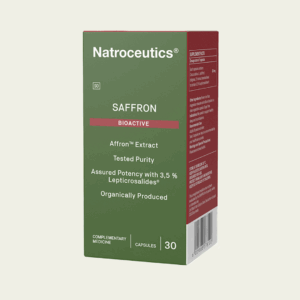
The Spice That Lifts the Mood and Quietly Tames Cravings
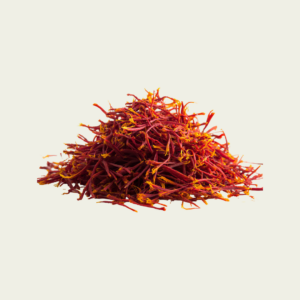
Why saffron is emerging as one of the most elegant supplements for emotional balance.
Saffron has always been rare. Harvested by hand, thread by thread, it was prized long before modern medicine had names for neurotransmitters or inflammation. What we’re now discovering is that saffron doesn’t work by forcing the body to change, it works by gently nudging the nervous system back into balance. And that’s exactly why it’s showing up in research on mood, cravings, and emotional resilience.
When mood, motivation, and appetite are connected
Low mood rarely travels alone. It often comes with:
- sugar or carb cravings
- emotional eating
- fatigue or low motivation
- PMS-related irritability or low mood
This isn’t a character flaw, it’s neurochemistry.
Serotonin and dopamine don’t just affect how you feel. They influence:
- appetite regulation
- satiety
- impulse control
- emotional resilience
Saffron appears to support these pathways, not by overstimulation, but by modulating neurotransmitter activity and reducing neuroinflammation.
What the research shows
Multiple randomised controlled trials have found that standardised saffron extracts:
- improve mild to moderate depressive symptoms, with effects comparable to first-line antidepressants in some studies
- reduce snacking and emotional eating, particularly cravings for sweet foods
- improve PMS-related mood symptoms, including irritability and low mood
What stands out is not just that saffron works — but how well it’s tolerated, even in sensitive individuals.
Why saffron helps with cravings
Saffron appears to influence serotonin reuptake, helping stabilise appetite signals and emotional reward pathways.
In practical terms, many people notice:
- fewer impulsive snack cravings
- less emotional eating
- improved satiety between meals
Not because they’re “trying harder” — but because the internal noise quiets down.
A gentler option for sensitive systems
Unlike many mood-support supplements, saffron:
- is non-sedating
- doesn’t overstimulate
- doesn’t blunt emotions
This makes it particularly useful for people who:
- don’t tolerate stimulants
- feel flat or anxious on conventional mood supplements
- want support without altering their personality
How saffron is typically used
- Dose: Most clinical trials use 28–30 mg/day of a standardized extract
- Form matters: Look for patented extracts with defined levels of crocin and safranal
- Timing: Can be taken once daily; some prefer morning for mood clarity
Consistency matters more than dose escalation.
The DietIQ gene-informed view
For individuals with genetic tendencies toward serotonin imbalance, stress sensitivity, emotional eating patterns and PMS-related mood changes, saffron offers a nutritional, non-pharmaceutical bridge between food, mood, and behaviour.
It doesn’t override the system, it supports it.
Final thought
Saffron doesn’t numb emotions. It helps soften the edges so choices feel easier, mood feels steadier, and cravings lose their grip. Sometimes, the most powerful support comes from the gentlest signal.
The DietIQ Perspective
At DietIQ, we value supplements that work with the nervous system, not against it. Saffron is one of those rare tools – subtle, evidence-based, and deeply respectful of the body’s natural rhythms.
References
- Hausenblas, H.A. et al. (2013). Saffron Extract Reduces Snacking and Increases Satiety in Mildly Overweight Women. Nutr Res, 33(4): 280–288.
- Lopresti, A.L. et al. (2019). Saffron for Mood and Emotional Wellbeing: A Systematic Review. Hum Psychopharmacol, 34(3): e2709.
- Shafiee, M. et al. (2021). Saffron vs Fluoxetine in Mild to Moderate Depression. J Affect Disord, 282: 246–253.
- Agha-Hosseini, M. et al. (2018). Saffron in the Treatment of PMS. J Altern Complement Med, 24(6): 603–608.