Not Just for Muscles: How Creatine Fuels a Sharper, Calmer, More Resilient Brain
When most people hear “creatine,” they picture gym bags, muscle gains, and protein shakes.
But your brain, the hungriest organ in your body, uses just as much of this tiny molecule as your biceps do.
Every thought, memory, and mood change depends on energy. Neurons don’t store much of it, so they rely on the phosphocreatine system to recycle ATP in milliseconds. When that backup system runs low—during sleep loss, stress, inflammation, or intense mental effort—you feel it: brain fog, fatigue, slower focus, low mood.
The Brain’s Hidden Energy Crisis
Your brain uses about 20 % of your body’s total energy. Under stress, injury, or inflammation, energy demand spikes while ATP supply falters. That’s when creatine steps in, donating phosphate groups to rebuild ATP instantly—keeping neurons firing smoothly.
Researchers now call this the “neuroenergetic hypothesis”: cognitive decline, mood disorders, and even trauma recovery often involve failing energy metabolism inside brain cells.
What the Research Says
A 2024 meta-analysis in Neuroscience & Biobehavioral Reviews found that creatine supplementation improved working memory, reasoning, and mental fatigue resistance, especially under sleep deprivation or stress.
Brain-imaging studies show that after just 4–6 weeks of creatine, brain phosphocreatine stores rise by ~5–10 %, improving energetic stability during demanding tasks (Clark et al., Front Nutr 2023).
In mood research, adjunctive creatine (2–5 g/day) has shown benefits in depression and post-traumatic stress, likely via mitochondrial protection and enhanced serotonin signalling (Kious et al., Transl Psychiatry 2022).
For older adults, creatine helps preserve cognitive speed and muscle function simultaneously—a dual win against age-related decline (Avgerinos et al., Nutrients 2025).
What You Might Notice
Clients often describe clearer morning focus and reduced “mental fatigue,” more emotional steadiness under stress, faster recall, easier multitasking, and improved workout recovery and cognitive endurance.
These subtle gains appear after 3–6 weeks of consistent intake.
How to Use It
Form: Creatine monohydrate remains the gold standard—stable, well-researched, and affordable.
Dose: 3–5 g daily. (Loading phases aren’t necessary for brain effects.)
Timing: With food or after exercise—absorption improves with carbohydrates.
Synergy: Combine with omega-3s or magnesium for mitochondrial support.
Hydration: Creatine draws water into cells, so extra fluids help prevent headaches.
Safety & Considerations
Creatine is one of the most studied supplements in human history. Trials up to 30 g/day show excellent tolerance.
Avoid only in advanced kidney disease unless cleared by a physician. No negative interaction with most medications has been shown.
The DietIQ Perspective
For clients with high mental load, chronic inflammation, mitochondrial gene variants (like SOD2 or PGC-1α), or neurological stress, creatine becomes more than a gym aid—it’s neuro-nutrition.
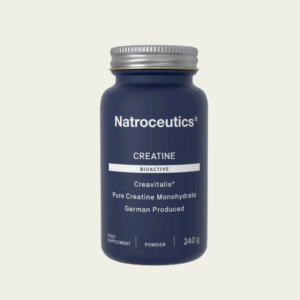
We source Natroceutics Creatine pharmaceutical-grade creatine with no fillers or artificial sweeteners, ensuring clean, predictable results.
References
- Avgerinos K.I. et al. (2025) Creatine Supplementation and Cognitive Function in Older Adults: Systematic Review.Nutrients 17(2): 312.
- Clark J.F. et al. (2023) Neuroprotective Roles of Creatine in Brain Energy Metabolism. Front Nutr 10: 1157903.
- Kious B.M. et al. (2022) Creatine Augmentation in Major Depressive Disorder and PTSD: Mechanistic Review.Transl Psychiatry 12(1): 504.
- Rae C. et al. (2024) Cognitive Enhancement With Creatine: Updated Meta-analysis. Neurosci Biobehav Rev 162: 105472.
- Rawson E.S. & Persky A.M. (2023) Safety and Efficacy of Creatine Supplementation in Health and Disease. J Int Soc Sports Nutr 20(1): 78.